



Repairing a damaged relationship requires honest communication, empathy, accountability, and patience. By addressing root issues, rebuilding trust through consistent actions, and practicing healthy communication habits, people can heal conflicts, strengthen connections, and create more resilient relationships.
Every meaningful relationship hits rough patches. Whether it’s a romantic partnership, a friendship, or a bond with family, conflict and disconnection are part of being human. The good news? A damaged relationship is rarely beyond hope. With patience, honesty, and the right tools, you can mend what feels broken and build something even stronger than before.
This guide walks you through how to repair a damaged relationship step by step. You’ll find practical strategies, real-world examples, and gentle advice that meets you where you are. Let’s begin the journey toward healing together.
Understanding What “Damaged” Really Means
Before you can fix something, you need to understand what went wrong. A relationship doesn’t usually break in a single moment. More often, small cracks form over time until the foundation feels unstable.
Damage can look different depending on the relationship. Sometimes it’s a major betrayal, like a broken promise or dishonesty. Other times, it’s the slow drift of two people who stopped truly listening to each other. Recognizing the type of damage you’re dealing with helps you choose the right path forward.
Common Signs a Relationship Needs Repair

When a connection is struggling, the warning signs often show up in everyday moments. Watch for these patterns:
- Conversations turn into arguments more often than not
- One or both people feel unheard or dismissed
- Physical or emotional distance grows steadily
- Small issues trigger big reactions
- Trust feels shaky or has been broken
- You avoid spending time together
- Resentment builds quietly beneath the surface
If several of these feel familiar, don’t panic. Awareness is the first step. Naming the problem gives you the power to address it.
Why Relationships Drift Apart
Relationships rarely fall apart for one single reason. Usually, several factors stack up over time. Stress from work, financial pressure, poor communication habits, and unmet needs all play a role. Life transitions like having children, moving, or changing careers can also strain a bond.
Understanding the “why” behind the damage matters. When you know the root cause, you can treat the real issue instead of just the symptoms. This deeper understanding sets the stage for genuine repair rather than a quick, temporary patch.
The Mindset You Need Before You Start
Repairing a connection takes more than good intentions. It requires the right frame of mind. Before you dive into the practical steps, prepare yourself emotionally for the work ahead.
Take Honest Responsibility
Healing begins with honesty, especially with yourself. Ask what role you played in the breakdown. This isn’t about blame or self-punishment. It’s about ownership. When both people own their part, defensiveness fades and real progress becomes possible.
Avoid the trap of keeping score. Relationships aren’t competitions. The goal isn’t to prove who was more wrong. The goal is to move forward together with mutual respect and care.
Approach With Empathy
Empathy is the bridge that connects two hurting people. Try to see the situation through the other person’s eyes. What were they feeling? What needs of theirs went unmet? When you lead with empathy, you create a safe space for honest conversation.
This doesn’t mean you ignore your own feelings. It means you hold space for both perspectives at once. That balance is where healing happens.
Commit to the Long Game
Quick fixes rarely last. Real repair takes time, sometimes weeks or months. Set realistic expectations and remind yourself that setbacks are normal. Progress isn’t a straight line. Some days will feel hopeful, others discouraging. Stay committed to the process, and trust that consistent effort pays off.
Practical Steps on How to Repair a Damaged Relationship
Now let’s get into the heart of the matter. These actionable steps will guide you as you work to repair a relationship that means a lot to you. Take them one at a time, and adapt them to your unique situation.
Step 1: Open an Honest Conversation
Everything starts with talking. But not just any talking. You need a calm, open, and judgment-free conversation. Choose a quiet moment when neither person feels rushed or stressed.
Begin by expressing your desire to make things better. Use “I” statements instead of “you” accusations. For example, say “I felt hurt when plans changed” rather than “You always cancel on me.” This small shift keeps the conversation from turning into a blame game.
Listen as much as you speak. Often, people fight to be heard. When you truly listen, you show that the other person’s feelings matter to you.
Step 2: Acknowledge the Hurt
Don’t rush past the pain. Acknowledging what happened validates the other person’s experience. A simple, sincere “I’m sorry I hurt you” can carry enormous weight.
Avoid the temptation to add a “but” after your apology. “I’m sorry, but you also did…” undoes the entire gesture. A real apology stands on its own. It focuses on repair, not justification.
Step 3: Identify the Root Issues
Surface arguments often hide deeper problems. A fight about dishes might really be about feeling unappreciated. A disagreement over money might stem from fears about security. Dig beneath the surface together.
Ask gentle questions. “What do you really need from me?” or “What were you feeling underneath the anger?” These questions uncover the true issues that need attention.
Step 4: Create a Plan Together
Once you understand the core problems, work as a team to find solutions. Repair is a shared project, not a solo mission. Agree on specific changes you’ll both make.
Be concrete. Vague promises like “I’ll try harder” rarely stick. Instead, commit to clear actions, such as “We’ll have a phone-free dinner together three nights a week.” Specific goals are easier to follow and measure.
A Practical Repair Roadmap
Sometimes it helps to see the process laid out clearly. The table below breaks down each stage of relationship repair, what it involves, and what it helps you achieve.
|
Stage |
What You Do |
What It Helps Achieve |
|---|---|---|
|
Recognition |
Identify the damage and its signs |
Clear understanding of the problem |
|
Reflection |
Take honest responsibility for your part |
Reduced defensiveness, more openness |
|
Conversation |
Talk openly using “I” statements |
Mutual understanding and validation |
|
Apology |
Acknowledge hurt sincerely |
Emotional healing and goodwill |
|
Root Analysis |
Dig into the deeper issues |
Solutions that last, not quick fixes |
|
Action Plan |
Agree on specific, shared changes |
Clear path forward together |
|
Rebuilding |
Follow through consistently |
Restored trust and connection |
|
Maintenance |
Keep nurturing the relationship |
Long-term stability and growth |
Use this roadmap as a flexible guide. Every relationship is different, so adjust the pace and approach to fit your circumstances.
How to Rebuild Trust in a Relationship
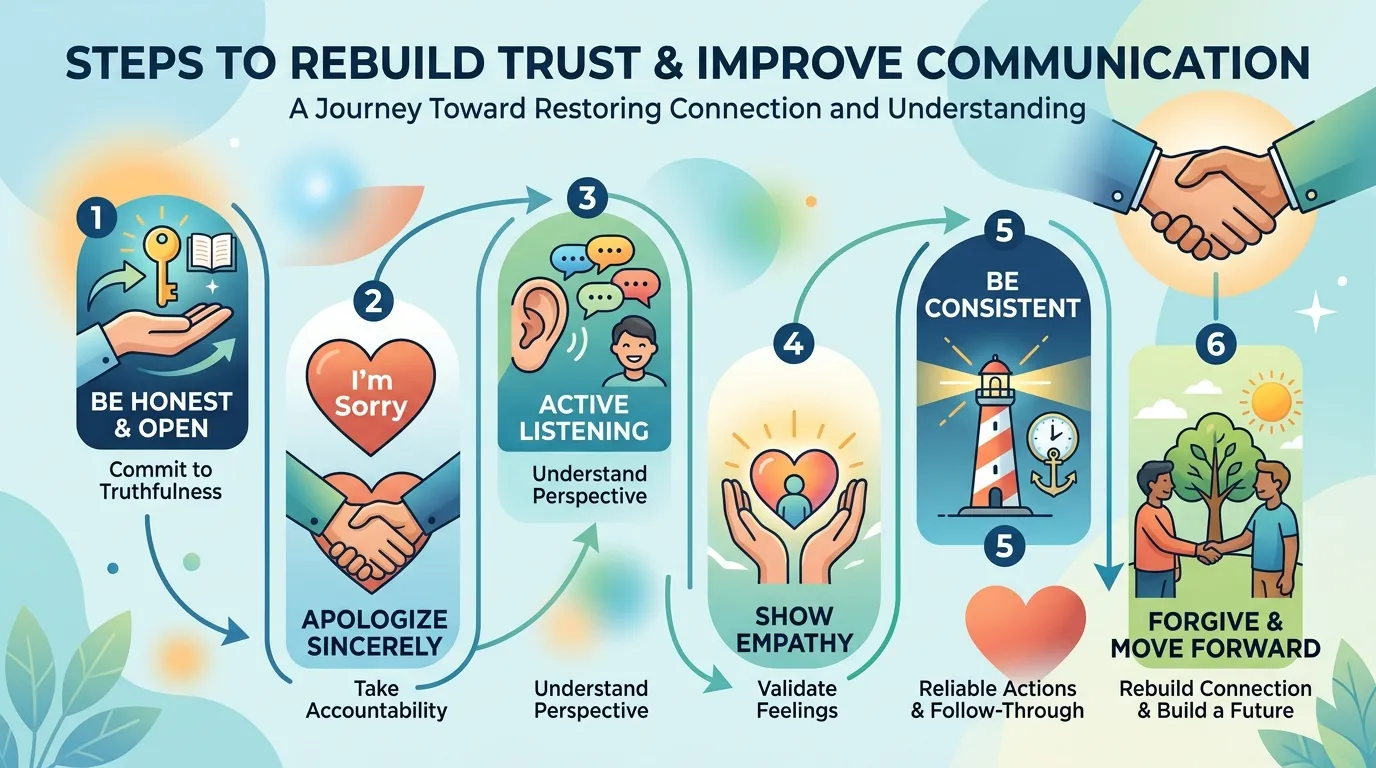
Trust is the foundation of every strong bond. When it breaks, the whole relationship feels unsteady. The work to rebuild trust in a relationship takes patience, but it’s absolutely possible.
Trust Is Earned Through Consistency
You can’t rebuild trust with words alone. It’s actions, repeated over time, that prove your reliability. If you say you’ll do something, do it. Small, consistent follow-through matters more than grand gestures.
Think of trust like a savings account. Every kept promise is a deposit. Every broken one is a withdrawal. Over time, steady deposits restore the balance and the security that comes with it.
Be Transparent and Open
Secrecy erodes trust, while openness builds it. If trust was broken by dishonesty, you’ll need to be especially transparent for a while. Share your feelings, your plans, and your whereabouts freely. This openness reassures the other person that you have nothing to hide.
Transparency also means being honest about your struggles. If you’re finding the repair difficult, say so. Honesty, even about hard things, deepens connection.
Give It Time
Rebuilding trust can’t be rushed. The person who was hurt needs time to feel safe again. Pushing them to “just move on” only adds pressure and pain. Be patient and let healing unfold at its own pace.
During this time, expect questions and occasional doubts. Respond with patience rather than frustration. Each reassuring response helps rebuild the security that was lost.
Forgive and Release Resentment
Holding onto resentment keeps the wound open. Forgiveness doesn’t mean forgetting or excusing what happened. It means choosing to let go of the grip that anger has on you. This release frees both people to move forward.
Forgiveness is often a process, not a single decision. Some days you’ll feel ready to let go, others you’ll feel the hurt return. Be gentle with yourself as you work through it.
The Power of Healthy Relationship Communication
If there’s one skill that transforms relationships, it’s communication. Healthy relationship communication turns conflict into connection and misunderstanding into understanding. Let’s explore how to communicate in ways that heal rather than harm.
Listen to Understand, Not to Respond
Most of us listen with the goal of replying. We’re already forming our response before the other person finishes speaking. True listening is different. It means giving your full attention and seeking to understand.
Practice reflective listening. After your partner speaks, summarize what you heard. “So you felt ignored when I worked late?” This shows you’re truly paying attention and gives them a chance to clarify.
Choose Your Words With Care
Words have power. They can build up or tear down. During tense moments, slow down and choose your words thoughtfully. Avoid absolutes like “always” and “never,” which tend to escalate conflict.
Speak from your own experience rather than making accusations. Focus on how you feel and what you need, not on attacking the other person’s character.
Manage Conflict Without Damage
Disagreements are inevitable, even in the healthiest relationships. The goal isn’t to avoid conflict but to handle it well. Here are some habits that keep arguments constructive:
- Take a break if emotions run too high
- Stick to one issue at a time instead of bringing up old grievances
- Avoid name-calling or hurtful labels
- Look for compromise rather than winning
- Return to the conversation once you’ve both calmed down
These habits prevent normal disagreements from causing lasting damage. They keep the focus on solving problems together.
Nonverbal Communication Matters
Words are only part of the message. Your tone, body language, and facial expressions speak volumes too. Crossed arms, eye-rolling, or a sharp tone can undermine even the kindest words.
Pay attention to your nonverbal cues. Make eye contact, soften your posture, and use a warm tone. These small signals show genuine openness and care, reinforcing your spoken words.
When to Seek Outside Support
Sometimes, despite your best efforts, you need extra help. There’s no shame in reaching out for support. In fact, seeking guidance is a sign of strength and commitment.
A trusted friend, counselor, or therapist can offer fresh perspective and proven tools. Professional support is especially valuable when communication keeps breaking down or when deep wounds need careful attention.
If you’re looking for trustworthy guidance and practical relationship advice, helpful resources are just a click away.
Explore expert-backed tips and tools here raching out doesn’t mean your relationship has failed. It means you care enough to give it every chance to thrive. Many couples and friends find that a little outside guidance makes all the difference.
Signs It Might Be Time for Professional Help
How do you know when to bring in a professional? Consider seeking support if you notice these patterns:
- The same arguments repeat without resolution
- One or both people feel hopeless about change
- Trust has been deeply broken and feels impossible to rebuild
- Communication consistently turns hostile
- You’re dealing with issues like addiction, abuse, or trauma
A trained professional offers a neutral space and proven techniques. They help you navigate challenges that feel too big to handle alone.
Maintaining a Healthy Relationship After Repair

Fixing the relationship is only part of the journey. To keep it strong, you’ll need ongoing care and attention. Think of your relationship like a garden. Even after you’ve repaired the damage, it needs regular tending to flourish.
Make Time for Connection
Life gets busy, and relationships often slip down the priority list. Protect quality time together. Schedule regular check-ins, date nights, or simple moments of connection. These rituals remind you both why the relationship matters.
Quality matters more than quantity. Even fifteen minutes of focused, distraction-free time can strengthen your bond. Put away the phones and truly be present with each other.
Keep Communicating Openly
The healthy relationship communication habits you built during repair shouldn’t fade away. Keep them alive. Continue checking in about feelings, needs, and concerns before they grow into problems.
Regular, honest conversation prevents small issues from becoming big ones. It keeps you connected and aligned as life changes around you.
Show Appreciation Often
Never underestimate the power of gratitude. Expressing appreciation makes people feel valued and loved. Say thank you for the little things. Notice and acknowledge your partner’s efforts.
A culture of appreciation creates positivity that buffers against future conflict. When people feel valued, they’re more forgiving and more committed to the relationship.
Grow Together
People change over time, and so do relationships. Embrace growth as a team. Support each other’s dreams and goals. Try new things together and keep curiosity alive.
When you grow together rather than apart, your relationship stays vibrant. Shared experiences and mutual support deepen your bond year after year.
Practical Relationship Advice for Everyday Life
Beyond the major steps, small daily habits make a huge difference. This relationship advice helps you nurture connection every single day. Little actions, repeated consistently, build a strong and loving bond.
Small Gestures, Big Impact
You don’t need grand romantic gestures to show love. Often, it’s the small things that matter most. A kind text during the day, a cup of coffee made just the way they like it, or a genuine compliment can brighten someone’s whole day.
These small acts of kindness add up. They communicate love and attention in a steady, reliable way. Make them a natural part of your daily routine.
Respect Each Other’s Space
Healthy relationships balance togetherness with independence. Give each other room to breathe. Respect personal hobbies, friendships, and alone time. This space actually strengthens your bond rather than weakening it.
When you support each other’s individuality, you both feel free and valued. Independence within a relationship creates a healthier, more sustainable connection.
Handle Disagreements With Grace
Even after repair, disagreements will arise. That’s perfectly normal. What matters is how you handle them. Stay respectful, stay curious, and remember you’re on the same team.
Approach conflicts as problems to solve together, not battles to win. This mindset keeps disagreements from causing fresh damage and helps you grow closer through challenges.
Overcoming Common Roadblocks
Even with the best intentions, you’ll likely hit obstacles along the way. Knowing what to expect helps you push through. Here are some common roadblocks and how to handle them.
When Old Wounds Resurface
During repair, painful memories may come flooding back. This is normal. Don’t see it as a failure. Instead, treat it as part of the healing process. Acknowledge the feeling, talk about it, and gently return to your goals.
Healing isn’t linear. Some old wounds need to be revisited before they fully close. Be patient with yourself and each other when this happens.
When One Person Wants to Repair More Than the Other
Sometimes one person is more eager to fix things. This imbalance can feel frustrating and lonely. If this is your situation, focus on what you can control: your own actions and attitude.
Lead by example. Show consistency, patience, and genuine effort. Sometimes your steady commitment inspires the other person to engage more fully over time.
When Progress Feels Slow
Repair takes time, and slow progress can be discouraging. Celebrate small wins along the way. Each honest conversation, each kept promise, and each moment of connection is a victory worth recognizing.
Keep your eyes on the bigger picture. Lasting change builds gradually. Trust that your consistent efforts are moving you in the right direction, even when it feels slow.
Frequently Asked Questions
How long does it take to repair a damaged relationship?
There’s no fixed timeline. Some relationships heal in a few weeks, while others take many months. The timeline depends on the depth of the damage, the willingness of both people, and the consistency of effort. Be patient and focus on steady progress rather than rushing toward a finish line.
Can you truly repair a relationship after a betrayal?
Yes, many relationships survive and even thrive after betrayal. It requires genuine remorse, full transparency, and a strong commitment to rebuild trust in a relationship. The hurt person needs time and reassurance to feel safe again. With patience and honest effort from both sides, deep healing is absolutely possible.
What is the first step to repair a relationship?
The first step is opening an honest, calm conversation. Express your desire to make things better and listen with empathy. Avoid blame and use “I” statements to share your feelings. This openness creates a safe space where both people can begin to understand each other and work toward healing.
How do I rebuild trust after it’s been broken?
Rebuilding trust takes consistency, transparency, and time. Follow through on your promises, no matter how small. Be open about your feelings and actions to reassure the hurt person. Avoid pushing them to move on too quickly. Steady, reliable behavior over time slowly restores the trust that was lost.
What if my partner refuses to communicate?
This is challenging, but you can still make progress. Stay calm, patient, and approachable rather than pushing too hard. Lead by example with open, respectful communication. Sometimes creating a low-pressure environment encourages someone to open up. If silence continues, a counselor or therapist can help create a safe space for dialogue.
How important is communication in fixing relationships?
Communication is absolutely essential. Healthy relationship communication is the foundation of all repair work. It helps both people feel heard, understood, and valued. Without honest, respectful conversation, misunderstandings grow and resentment builds. Learning to listen and speak with care transforms conflict into connection and misunderstanding into mutual understanding.
Should we seek professional help for relationship problems?
Professional help is worth considering when issues feel too big to handle alone. If the same arguments keep repeating, trust feels impossible to rebuild, or communication turns hostile, a therapist can help. Seeking guidance isn’t a sign of failure. It shows real commitment to giving your relationship the best chance to heal.
How do I forgive someone who hurt me deeply?
Forgiveness is a process, not a single decision. It doesn’t mean forgetting or excusing the hurt. Instead, it means choosing to release the grip that anger holds on you. Allow yourself to feel the pain, talk about it, and let go gradually. With time, forgiveness frees you to move forward.
Can a relationship go back to how it used to be?
Often, relationships don’t return to exactly how they were, and that’s okay. Instead, they can become something new and even stronger. The repair process teaches valuable lessons about communication, trust, and connection. Many people find their relationship grows deeper and more resilient than it ever was before.
What daily habits help maintain a healthy relationship?
Small, consistent habits make a big difference. Spend quality time together without distractions, express appreciation often, and keep communicating openly. Respect each other’s space and independence too. These everyday actions nurture your bond and prevent small issues from growing. Consistency in these habits keeps your relationship strong over time.
How do I stop the same arguments from repeating?
Repeated arguments usually point to an unresolved root issue. Dig beneath the surface fight to find the real need or fear driving it. Address that core problem together rather than the surface symptom. Agree on specific changes, and follow through consistently. Solving the deeper issue stops the cycle from continuing.
Is it normal to feel discouraged during the repair process?
Absolutely. Repair isn’t a straight line, and discouragement is a natural part of it. Some days feel hopeful while others feel hard. Old wounds may resurface, and progress can seem slow. Be gentle with yourself and celebrate small wins. Staying committed through the ups and downs leads to lasting healing.
Final Thoughts
Repairing a damaged relationship is one of the most meaningful things you can do. It takes courage, patience, and a willingness to grow. Remember that healing happens one honest conversation, one kept promise, and one act of kindness at a time.
You now have the tools and knowledge to begin. Lead with empathy, communicate openly, and stay committed to the process. Whether you’re working to rebuild trust, improve communication, or simply reconnect, every effort counts. Your relationship is worth the work, and a stronger, healthier bond is within your reach.
